Thursday, August 9, 2018

How can teachers help children who have witnessed family separation? By Tracey T. Flores, Luis Urrieta July 27, 2018 HOUSTON CHRONICLE


LOCAL  // GRAY MATTERS 

How can teachers help children who have witnessed family separation?

In a few weeks, most children will be headed back to school.
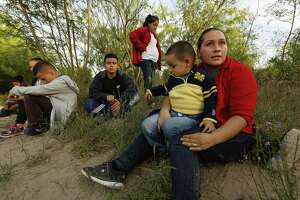
Meanwhile, images of mothers and fathers seeking refuge and being separated from their children upon trying to enter the country along the U.S-México border have been circulating everywhere. They are on the cover of magazines and on the front page of local and national newspapers. Small children sobbing as their parents are handcuffed. Adolescent youth held in detention centers. Mothers and fathers in anguish as they wait for answers after having their children taken away from them.
These images have flooded our social media feeds and continue to be debated on the evening news even as efforts are being made to reunite families.
Not only have we seen these images and heard the stories shared on different platforms, but so have our children. Though we might think that this issue does not impact them, unknowingly, they might indeed be in closer proximity to these issues than we think they are. Within our neighborhoods, churches and other social outlets, children have friends or know of peers who have been directly or indirectly impacted by Trump's "zero tolerance" immigration policy. Some children and youth in our schools are themselves undocumented, or they come from mixed-status families and fear the uncertainty of their futures in this country. Some children who might be very close to us might have experienced severe trauma from such separations and now live in constant fear.
As teacher educators and former classroom teachers, first and foremost, we believe that all teachers as public servants should make their number one priority ensuring that all children feel safe and secure in their classrooms. Creating a safe space takes work, and it starts not by ignoring such pressing issues and pretending that the children don't know and are not affected by them but by opening space for dialogue in the classroom.
Above all, it happens by teachers holding space to listen and hear children and youths' stories, their concerns, their fears and their questions. All our children will have stories and questions of what they have seen, heard, witnessed or experienced firsthand. We cannot and should not ignore their questions.
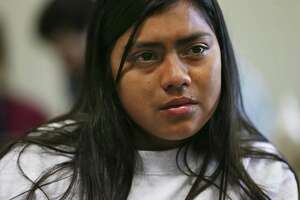
No matter how uncomfortable their questions might make us feel, we need to respond to them. One entry point into such conversations and into responding to children's concerns is through the use of children's books that directly speak to issues of immigration, family separation and detention.
Children's books can help us begin a conversation to address the root causes of their concerns and the harm that these policies and acts of violence cause within communities. Children's books can help us discuss the problem and all the layers of its complexity and also often offer possible solutions to the issue.
"Two White Rabbits" by Jairo Buitrago is a book about immigration that is appropriate for children of all ages and that is written in clear and accessible language. The story is told from the point of a view of a young girl who is traveling with her father. She is unaware of where they are going. The illustrations, however, provide more detail of their journey and where they are headed — la frontera, or the border. Though she might not notice or understand, her father and the other adults along with them express feelings and actions that provide entry points into conversations with children about immigration. Their words and the book's illustrations open up space for teachers to draw upon their own students' questions, understandings, ideas and experiences about immigration in honest and meaningful ways.
As teacher educators and teachers, we need to listen with compassion and without judgment and look for resources to support our children and their families as we work together to learn from one another's stories and experiences.
There might be things that we are uncertain about, or answers that we cannot provide, but we need to be honest about these things with children, too.
Teachers have a moral obligation to open space in the classrooms to discuss the current political moment. The decision to address the issue is deeply rooted in teachers' long held convictions to all children, families and communities as public servants and what we believe to be a human issue of equity and justice.
This is not an issue where there are two sides. There is only one side, the moral side — you don't take children away from their parents.
Tracey T. Flores is an Assistant Professor of Language and Literacy Studies in the Department of Curriculum and Instruction and is affiliated with The Center for Mexican American Studies, and Luis Urrieta is the Susan B. and John L. Adams Professor of Education and is affiliated with The Lozano Long Institute of Latin American Studies, The Center for Mexican American Studies and the Native American and Indigenous Studies Program at the University of Texas at Austin.

Monday, August 6, 2018

call for proposals: TESOL Journal Special Issue 2019 An identity-oriented lens to TESOL teachers’ lives: From teacher education to classroom contexts

TESOL Journal Special Issue 2019
An identity-oriented lens to TESOL teachers’ lives: From teacher education to classroom contexts
Kristen Lindahl, University of Texas, San Antonio 
Bedrettin Yazan, University of Alabama, Tuscaloosa
Call for Proposals
In the broader field of teaching and teacher education, teacher identity has long been established as a crucial component to both pre- and in-service teacher learning development, as well as integral to the ways they enact their professional practices in the classroom. Identity work, then, has become especially relevant to the TESOL field, as it pertains to educators in the various social, cultural, and political contexts of English language teaching worldwide. While extensive research has been conducted on language teacher identity as a research frame for understanding classroom phenomena, much less attention has been paid to the potential use of language teacher identity as a pedagogical innovation in teacher education and development.
Potential tensions may arise, though, with the use of language teacher identity work as a pedagogical innovation. While language teacher identity is framed as multiple, ever-changing, unstable, (often) contradictory, fragmented, and agentive, traditional methods of pre- and in-service teacher education tend to consist of isolated chunks of theoretical and practical knowledge delivered at various times during the career trajectory. Reconciling the dynamic nature of language teacher identity with the more static nature of teacher development has thus emerged as a crucial task for both TESOL practitioners and teacher educators. As such, additional investigation of the multiple identity options available to teachers, the ways in which they claim agency as TESOL professionals, and the pedagogical relevance of their identity negotiation to their students’ own identities as users of English is warranted.
Given the nuanced nature of teacher identity development, the present special issue seeks proposals of all submission categories highlighting perspectives that construct teacher identity as intersectional, multidimensional, and dynamic. The goal of the issue is to provide TESOL professionals with a lens to better understand teacher learning, professionalization, and ongoing negotiation / reconstruction of identities in multiple contexts of English language education across the world. The studies in this issue will explore how teacher identities may be used as explicit foci within the pedagogy of TESOL teacher education. Thereby, we specifically call for papers which explore identity-oriented practices in teacher education in relation to (non-)nativeness; intersectionality; critical language awareness; social justice; intercultural competence; self-narratives / autoethnographies; privilege and marginalization; positioning within communities; teacher agency, investment, and commitment; and teacher emotions, beliefs, and ideologies.
Possible topics include but are not limited to:
  • The role of pre- and inservice teacher education practices in helping TESOL professionals develop intersectional identities (e.g., “NEST,” “NNEST,” monolingual, multilingual, translingual) within the dominant discourses of nativeness, nationality, gender, race, social class, religion, and community membership in their teaching contexts;
  • The role of pre- and inservice teacher education practices in empowering TESOL professionals to assert agency over restrictive binary categorical identity options (e.g., “NEST” vs. ”NNEST”) with variable experiences of privilege and marginalization in glocal contexts of English language teaching;
  • The role of pre- and inservice teacher education practices in providing discursive spaces in which TESOL professionals can cognitively and emotionally invest in agentive roles to negotiate their teacher identities;  
  • The role of pre- and inservice teacher education practices in fostering identity options for critically reflexive teachers to use their identities as pedagogy that is invested in learners’ identity negotiation during the processes of language education;
  • TESOL teacher educator identities as pedagogies of teacher education.
We are accepting submissions for feature articles and all other submission categories. Note that the acceptance of proposal does not guarantee publication. There will be a regular peer review process for all manuscripts submitted to the special issue.
Complete TESOL Journal author guidelines can be found at: https://onlinelibrary.wiley.com/page/journal/19493533/homepage/forauthors.html
Please submit your 200-300 word proposal to TJspecialissue2019@gmail.com  
Time Schedule
  • Proposal submission due: September 15, 2018
  • Notifications for inviting full articles: September 30, 2018
  • Full manuscripts due: January 15, 2019

Wednesday, July 25, 2018

Berta Caceres' murder trial to begin

Berta Caceres' murder trial to begin
GHRC and our partners in Guatemala are very concerned that justice be served for the murder of Berta Caceres, the Honduran indigenous rights defender who was murdered in her home the evening of March 2, 2016.  Her case is a paradigmatic case for the region, and shares many similarities with land and indigenous rights defenders killed in Guatemala. In fact, Guatemalan legal and human rights experts have shared their experience with Berta's organization COPINH to support their struggle for justice.

After tremendous international pressure, the skilled work of the Honduran legal team, and with the courageous insistence of Berta's family and organization, COPINH, nine suspects have been arrested and the real story of Bertas murder is becoming clear.  The gunmen who stormed her home were apparently coordinated by an active duty Honduran intelligence officer together with a former military officer working in a private security company, who had been hired by executives of the DESA Corporation. DESA sought to build the Agua Zarca dam in Lenca territory, a dam the communities opposed. Berta, as an effective and internationally recognized humen rights defender, was a problem in the way of DESA's plans.  The trial of the accused material authors is scheduled to begin September 10; but a key initial hearing is scheduled for Friday, July 27.

Take Action for Berta!
On Friday, July 27, the Tegucigalpa trial court will preside over the first hearing in the trial of eight men charged with the murder of Berta Caceres. This key hearing will shape the trial and significantly impact its outcome.  The public trial is scheduled to begin on September 10.
There are well founded concerns that the Honduran state prosecutor is undermining the possibility of justice by withholding evidence that could incriminate intellectual authors and providing accused murders with grounds to appeal a guilty verdict.
In this hearing the public prosecutor, the defense lawyers and lawyers representing Berta’s family and COPINH will present the evidence they intend to use in the trial. However, to date, the public prosecutor’s office has repeatedly refused to comply with court orders to hand over the vast majority of the evidence it has gathered in the investigation.
This amounts to contempt of court.  At least five times in the pre-trial phase hearings were suspended because the prosecutor failed to comply with court orders to provide evidence.  It is extremely alarming that the hearing to determine evidence may take place when the lawyers representing Berta’s family and organization, and the defense lawyers, have not been given access to the evidence gathered in investigations, including the extractions of computers, tablets, and other electronic storage devices seized during the search of DESA’s office, the search of Army Major Mariano Diaz’s home, and other key searches.  The information from most of the cell phones seized by the prosecutor’s office, including that of Major Mariano Diaz, has never been provided on the claim that they cannot be extracted.
The trial court must decide on Friday July 27 whether to proceed despite the public prosecutor’s office’s noncompliance with court orders or declare the public prosecutor in contempt of court and suspend the hearing until the evidence is provided.  
The small portion of evidence that the public prosecutor’s office has provided to the lawyers demonstrates culpability of most of the accused material authors and identifies intellectual authors who have yet to be prosecuted.  Telephone data shows not only the location and communications patterns of the accused but also the words used to coordinate her murder.
As a social movement leader and human rights defender Berta faced systematic persecution, a circumstance that impacts the definition and gravity of the crime.  Telephone communications cross referenced with violence and intimidation against Berta and COPINH members who opposed the Agua Zarca dam establish a criminal pattern of which Berta’s murder forms part.  
The court must allow the victim’s lawyers to present evidence, including expert analysis of the context in which Berta’s assassination occurred, that established the pattern of criminal actions and describes the criminal structure that carried it out.
Eight accused material authors will go to trial.  Douglas Geovanny Bustillo is a retired army officer and former chief of security for the DESA corporation building the Agua Zarca dam.  He is accused of planning the murder with DESA president David Castillo while Bustillo worked for an unrelated private security company.  Major Mariano Diaz Chavez, a long-time associate of Douglas Bustillo, was an active duty military officer at the time of his arrest and the chief of special forces intelligence at the time the murder plan was set into motion.   Henrry Hernandez had served under Mariano Diaz in the Special Forces training base, the 15th Battalion in the Bajo Aguan, but left to work in the security company employed by the Dinant palm oil corporation. When murder planning began, Hernandez went to work for Douglas Bustillo.  Emerson Duarte is accused of acting as a gunman hired by Henrry Hernandez, as is Emerson's twin brother Edilson Duarte, and their neighborhood associate Oscar Arnoldo Torres. The forth accused hired gun, Elvin Heriberto Rapalo, lived in the general vicinity of the Agua Zarca dam, in Honduras' Minister of Security's hometown. Sergio Rodriguez Orellana is an environmental engineer who was in charge of community outreach in the Rio Blanco region for the DESA corporation. On March 2, 2018 former military intelligence officer and West Point alumnus David Castillo, the President of DESA, was arrested as an intellectual author of the murder.  As his arrest came much later, he will be tried separately.
Take Action:
Call and e-mail your embassy in Honduras:
United States: Charge d' Affaires Heidi B. Fulton, U.S. Embassy in Tegucigalpa, BronkeHM@state.gov,  ++ (504) 2236-0320
Canada: Ambassador James Hill, Embassy of Canada in Honduras, Costa Rica and Nicaragua, james.hill@international.gc.ca, tglpa@international.gc.ca, ++ (504) 2232-4551
  • Explain who you are and where you’re calling from.Tell them you are concerned about the safeguarding of due process in the upcoming trial of the first eight people accused of Berta’s murder.
  • The public prosecutor has already refused to comply court orders to turn over evidence in at least 5 previous hearings. If the hearing proceeds on Friday, July 27, with the prosecutor’s office in contempt of court, it would lay the groundwork for allowing the defendants to appeal a guilty verdict for procedural violations.  It could also protect the intellectual authors, create impunity, and deny justice to the victims.
  • Ask the embassy to urge the public prosecutor’s office comply with court orders immediately, especially given that refusing to comply with court orders would constitute contempt of court.Ask the embassy to express to the court the high value our government places on safeguarding due process, and concern regarding ongoing non-compliance by the prosecutor with orders to present evidence to the victim’s lawyers and defense lawyers.
  • Also ask the embassy to stress to the court the importance of expert witnesses and other evidence that clarifies the pattern of criminal behavior and structures associated with a crime.

Monday, July 16, 2018

Journal CFP: Boyhood Studies (Special Issue) ​"Masculinity and Boyhood Constructions: The Connective Tissue in the School-to-Prison Pipeline"

Journal CFP: Boyhood Studies (Special Issue) ​"Masculinity and Boyhood Constructions: The Connective Tissue in the School-to-Prison Pipeline" 

Guest Editors: 
Edward Fergus, Urban Education, Temple University 
Juwan Bennett, Criminal Justice, Temple University 

The conversation on the school-to-prison pipeline among boys of color is complex and involves understanding how the 4 C’s -- classroom, cops, courts, and community -- interface to create a pipeline. However, what has been under-conceptualized is whether and how notions of masculinity and boyhood that emerge within these institutions may operate as an invisible connective tissue across these institutions. In other words, the manner in which the bodies of Black and Latino males are viewed, interacted with, and treated within these institutions provides a rationalizing frame for how the actions within institutions occur. This interdisciplinary special issue of Boyhood Studies intends to provide a conceptual exploration of how male bodies of color are constructed within and across these institutions in order to establish the pipeline as concretized through “normative” or oppressive notions of masculinity and boyhood. The interdisciplinary authors in this issue will outline the notions of masculinity and boyhood that appear within these institutions and their respective actions, e.g., suspensions (schools), arrests (police), sentencing (courts), and violence (communities). The focus will be on empirical and theoretical contributions that focus one of the 4 C’s.

Submission: Authors wanting to send in an abstract proposal first, are invited to do so not later than August 15, 2018. More information, including the style guide, can be found at www.berghahnjournals.com/boyhood-studies

Send your abstract, or any query, to Edward.fergus@temple.edu. Please entitle the email subject as “Abstract Submission: Special Issue on School-to-Prison Pipeline.”